
Skip to content
Avicen

Every case deserves your full expertise.

Your case
PDF3,600pages
Excel24sheets
Audio1 h 21of audio
Word290pages
Images32images
YOUR REPORT
Medical expert reportPersistent headaches · Return to work
01Mandate and reviewed records

From the injury to June 2026 follow-up.

02Medical record analysis

ENT, neurology and treatments.

03Reasoned conclusions

Return-to-work conditions to clarify.

Ready to export
1Write the report

Your reasoning takes shape.

Three benefits for your expert practice

less preparationtime
95%
faster to verify a finding,with supporting evidence
20×
of conclusionsunder your control
100%
“In a 2,367-page case file, Avicen instantly identifies a dosage inconsistency: 5 mg a day in the medical report, 5 mg morning and evening on the prescription.”
Medico-legal expertSwitzerland
2Verify the sources

Your signature stands behind your expertise.

Mixed headaches with an uncertain ENT contribution

Finding

The ENT report of 2 February describes a septal perforation and suggests chronic sinusitis, without establishing a definite link with the pain.

In the recorded consultation of 12 March, the neurologist identifies mixed headaches, with irritation of the greater occipital nerves and cervical muscle spasms. He reports a brain CT scan with no residual haemorrhagic changes.

The letter of 13 June reports that Saroten was stopped because it was ineffective and that the nerve blocks provided no significant benefit.

On the sinus CT scan of 25 October, the maxillary sinuses show peripheral thickening with a central air-filled portion and no visible fluid level on this slice.

To check

Assess the current contribution of nasal symptoms and muscle spasms to the persistent headaches to guide management; ENT surgery was only considered conditionally, if no other explanation could be found.

Dr Claire Valette Dumas · ENTValmont

2 February 2026 · ENT assessment

Adrien Morel describes intermittent pain following a previous facial injury. He reports right-sided nasal breathing difficulties and yellowish crusting.

Subject: persistent headaches · Specialist opinion
ENT examination on 3 November 2025 · CT scan on 25 October 2025

Examination shows a large septal perforation, possibly post-traumatic. The CT scan describes findings suggestive of chronic sinusitis.

The link between these abnormalities and the pain remains uncertain: another cause should be investigated. A possible procedure would only be discussed if no other explanation could be found.

Additional examination. Leftward septal deviation. No other ENT abnormalities are reported. The sense of smell is preserved.

Neurological opinion requested before considering surgery.
Dr Claire Valette Dumas · ENT
Page 1850 of 3890

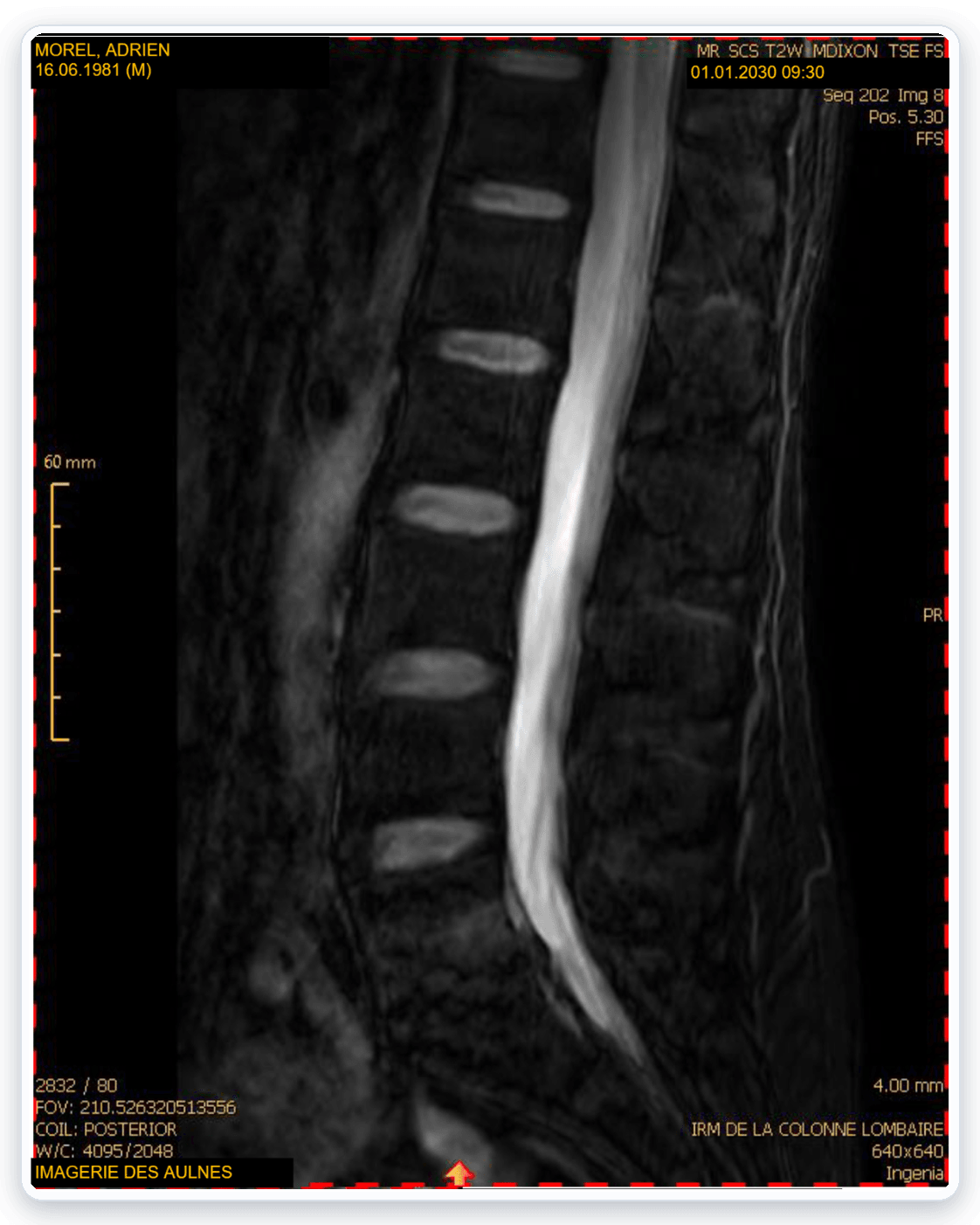
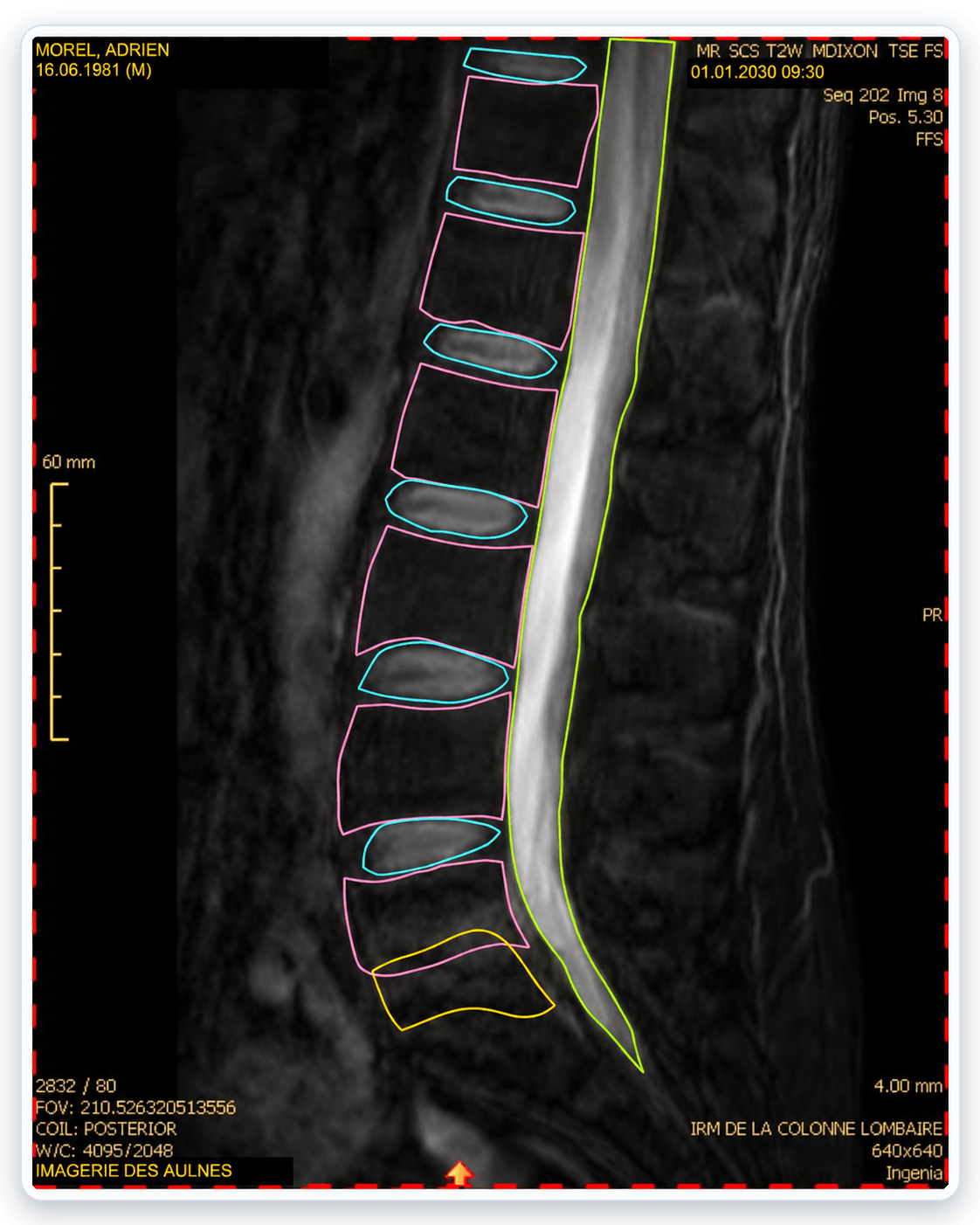
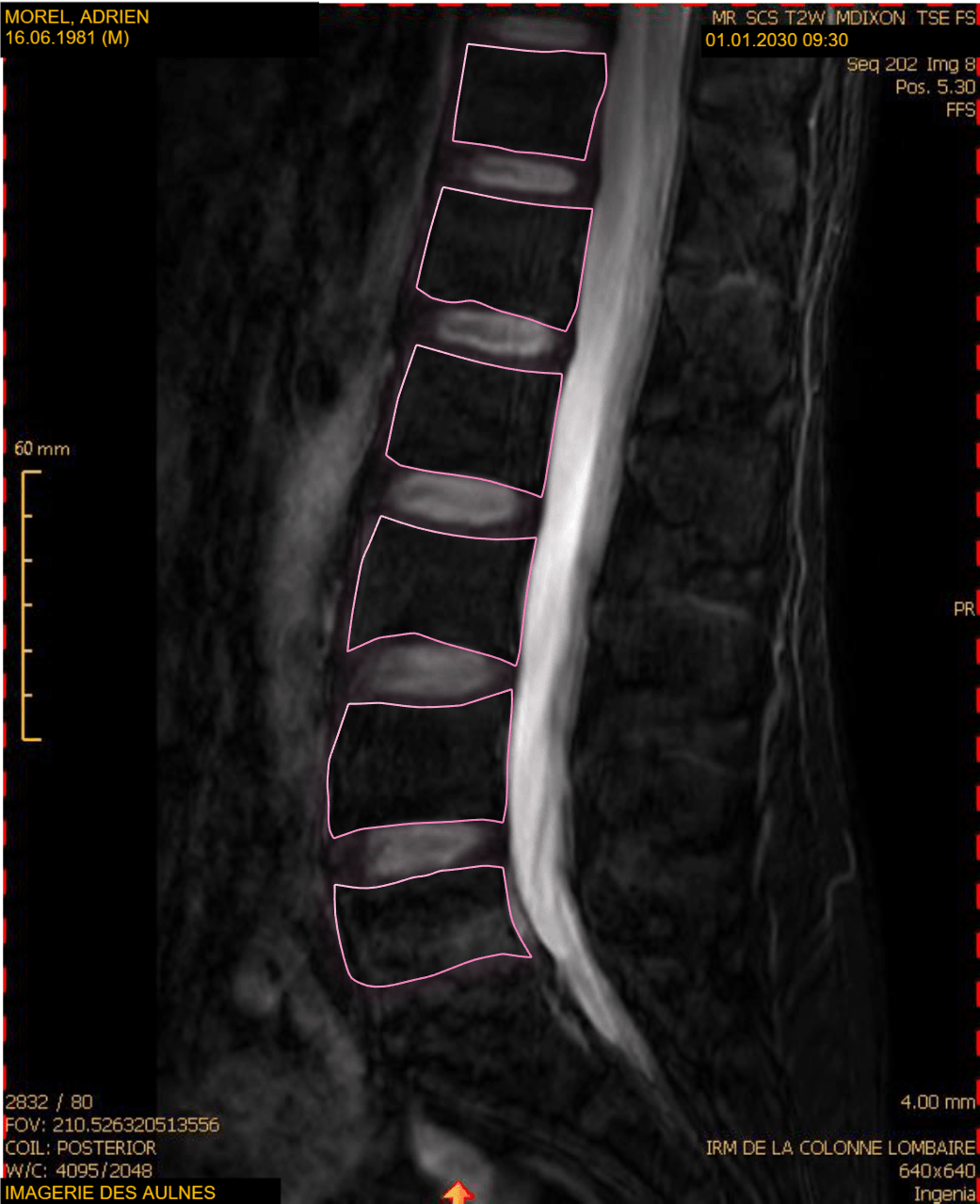
See the image. Understand what it reveals.

3Understand and compare

What happens today has a history.

  1. Improvement that still needs supporting evidence

    TreatmentsDiscrepancy

    The summary describes favourable progress on Saroten and after the nerve blocks, and maintains the return at 50% capacity.  In contrast, the letter of 13 June reports that Saroten was stopped because it was ineffective and that the nerve blocks provided no significant benefit. 

    Nassim BelcourGeneral internal medicineValmont
  2. Three months of follow-up, with no reported benefit

    Neurology follow-upTreatments

    On 12 March, the neurologist proposes Saroten and nerve blocks, with a review in three months.  At the review on 12 June, documented in the letter of 13 June, the patient reports stopping Saroten after a few weeks because it was ineffective.  The nerve blocks still provide no notable benefit. 

    At review, the headaches remain chronic and disabling. 

    Matthieu LerouxNeurologyValmont
  3. Return at 50% capacity, occupation to be clarified

    Work capacityPoint to clarify

    A return to work at 50% capacity is recommended from 15 April 2026. A review is planned in six weeks. 

    This period overlaps with the certificate of 2 April, which states total incapacity until 31 May. 

    Nassim BelcourGeneral internal medicineValmont

What changes everything is not always obvious.

Return to work: two opinions to compare.

Work capacity: 0 to 50%

DiscrepancyMedium
Finding

2 April: 100% incapacity for the usual occupation until 31 May.  16 April: return at 50% capacity from 15 April.  The periods overlap.

Hypothesis

An adapted role could explain the difference; the occupation being assessed still needs to be checked.

To check

Which occupation? Which limitations? What supports the 50% assessment?

Did the treatment actually help?

Treatment stopped, improvement reported

MedicationMedium
Finding

13 June: Saroten stopped, nerve blocks without significant benefit.  18 June: improvement with those same treatments. 

Hypothesis

An earlier assessment may have been carried forward; the assessment date still needs to be checked.

To check

Confirm the treatments taken and the clinical course between the two assessments.

Do the sinuses explain the pain?

Sinus abnormalities, uncertain causal link

DiscrepancyMedium
Finding

Abnormal sinus CT findings, but an uncertain link with the pain.  The neurologist also notes cervical muscle spasms. 

Hypothesis

Several causes may contribute; imaging alone does not establish a conclusion.

To check

Compare the symptoms with the ENT and neurological examinations.

Keep asking until you understand it all.

What supports a return to work at 50% capacity, and what still needs to be checked?

Avicen

The record contains two overlapping assessments. On their own, they do not explain the change to a return to work at 50% capacity.

On 2 April 2026, the treating physician states 100% incapacity for the usual occupation until 31 May, due to headaches and reported concentration difficulties.

The assessment of 16 April recommends a return at 50% capacity from 15 April and a review in six weeks. To check: the occupation being assessed, the stated limitations and the examinations performed between the two assessments.

The neurology consultation of 12 March describes mixed headaches, irritation of the greater occipital nerves and cervical muscle spasms. Their impact on work capacity still needs to be assessed.

The letter of 13 June reports that Saroten was stopped because it was ineffective and that the nerve blocks provided no significant benefit. The change in functional ability still needs to be checked.

Yet the summary of 18 June describes favourable progress on treatment and maintains the return at 50% capacity. This assessment needs to be compared with the preceding letter.

To clarify: the intended occupation, functional limitations, the clinical course between the two assessments and the treatments actually continued. These points remain unresolved before a conclusion can be reached.

The record contains two overlapping assessments. On their own, they do not explain the change to a return to work at 50% capacity.

On 2 April 2026, the treating physician states 100% incapacity for the usual occupation until 31 May, due to headaches and reported concentration difficulties.

Read the full answer

The record contains two overlapping assessments. On their own, they do not explain the change to a return to work at 50% capacity.

On 2 April 2026, the treating physician states 100% incapacity for the usual occupation until 31 May, due to headaches and reported concentration difficulties.

The assessment of 16 April recommends a return at 50% capacity from 15 April and a review in six weeks. To check: the occupation being assessed, the stated limitations and the examinations performed between the two assessments.

The neurology consultation of 12 March describes mixed headaches, irritation of the greater occipital nerves and cervical muscle spasms. Their impact on work capacity still needs to be assessed.

The letter of 13 June reports that Saroten was stopped because it was ineffective and that the nerve blocks provided no significant benefit. The change in functional ability still needs to be checked.

Yet the summary of 18 June describes favourable progress on treatment and maintains the return at 50% capacity. This assessment needs to be compared with the preceding letter.

To clarify: the intended occupation, functional limitations, the clinical course between the two assessments and the treatments actually continued. These points remain unresolved before a conclusion can be reached.

5 sources
4Get started

What matters has no format.

Documents

  • PDF
  • Word
  • Medical reports
  • Prescriptions
  • Handwritten notes
  • Faxes
  • Variable-quality scans

Data

  • Excel / CSV
  • Tables
  • Databases
  • Lab tables
  • Medication lists
  • Insurance forms

Imaging

  • DICOM
  • X-ray / CT scans
  • Clinical photos
  • Document images

Audio

  • Medical dictations
  • Recorded consultations

110+ languages

  • FR
  • EN
  • DE
  • IT
  • ES
Mixed-language cases

Their trust is your responsibility.It is ours too.

You decide who can access the case.

Your records are not used to train AI.

Your data is encrypted.

Before you get started.

Can I evaluate it with one of my own cases?

Yes. The initial conversation helps define your evaluation, without sharing patient data. The demo lasts 48 hours from activation, with a quota fixed and displayed in advance. The demo is complimentary, with no payment or required payment card. A data processing agreement covers the records you entrust to Avicen.

Do I need to prepare or sort my documents?

You can import your case as it is: scanned PDFs, handwritten notes, spreadsheets, images or audio recordings. There is no need to reconstruct it beforehand.

Do I stay in control of my report?

Yes. You choose the structure, check the sources and edit the text. You remain the author of your conclusions. Avicen helps you analyse documents and prepare the report; it does not diagnose or recommend treatment.

Can I download the content Avicen produces?

Yes. Summaries, chronologies, analyses, reports and chat responses: everything Avicen produces can be downloaded in Word or PDF format, with your own customisation.

Who can access the data I share?

You manage access to the case according to each person’s role, in a workspace separate from other organisations. Your data is encrypted, hosted according to your region and never used to train a model.

Can I work with other experts?

Yes. You share the case in a common workspace, with appropriate permissions for each contributor. You can exchange comments, and actions are logged.

Your expertise is irreplaceable. Nothing should limit it.

Try Avicen for free